Custom Storefront & Business Signage
Script, block, and logo lettering bent to your exact pattern — the sign that puts your name on the street.
Hand-bent neon, gas-filled, sealed on our own bench
A hand-bent neon sign studio — custom storefront and business signage, open signs, art installation pieces, vintage neon restoration and repair, and architectural channel-letter accent lighting, every tube bent, filled, and sealed on our own bench.
Scroll — cold glass strikes to light
Script, block, and logo lettering bent to your exact pattern — the sign that puts your name on the street.
Compact, budget-friendly pieces sized for a storefront window — often our customers' first neon and their most-viewed.
Gallery commissions and private collector pieces where color and line are the entire brief, not legibility.
Re-gassing, rewiring, and selective rebending of real historic signs — matched to what the original glass can still do.
Halo and cove accent runs that read as a glow rather than a readable sign — restaurants, lobbies, and facades.
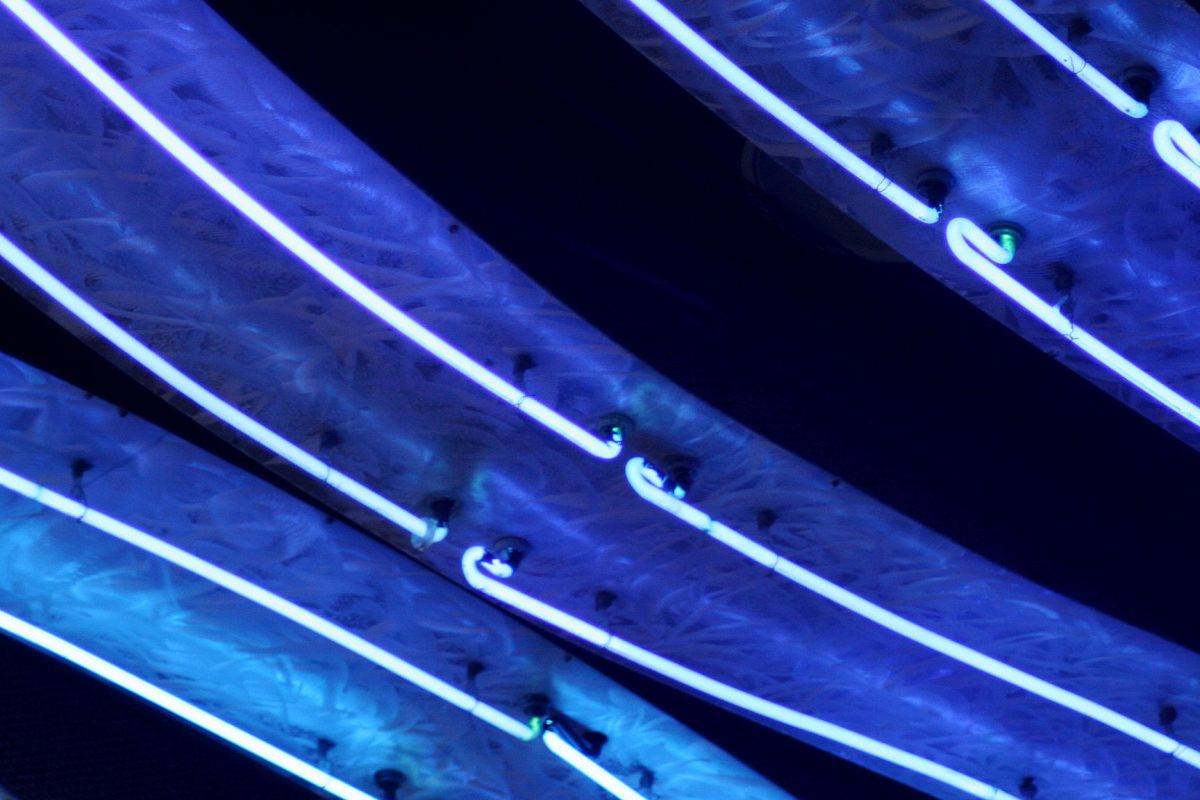
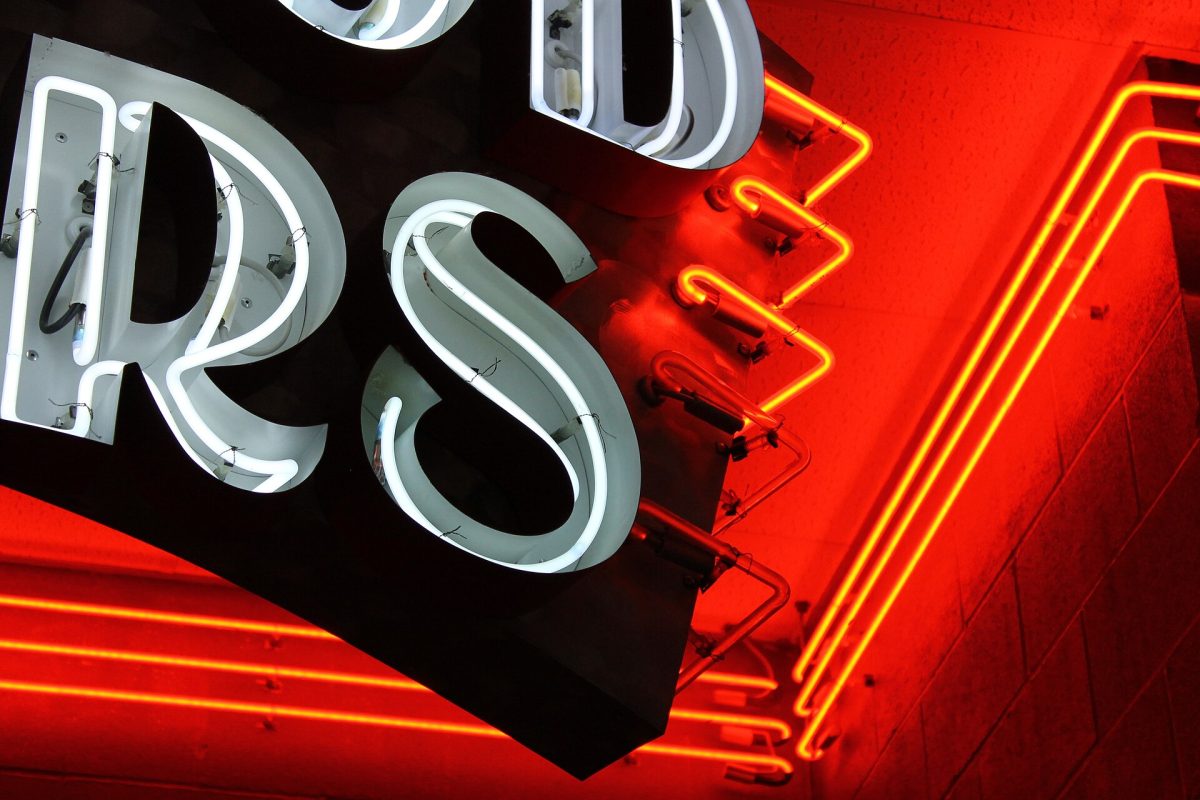
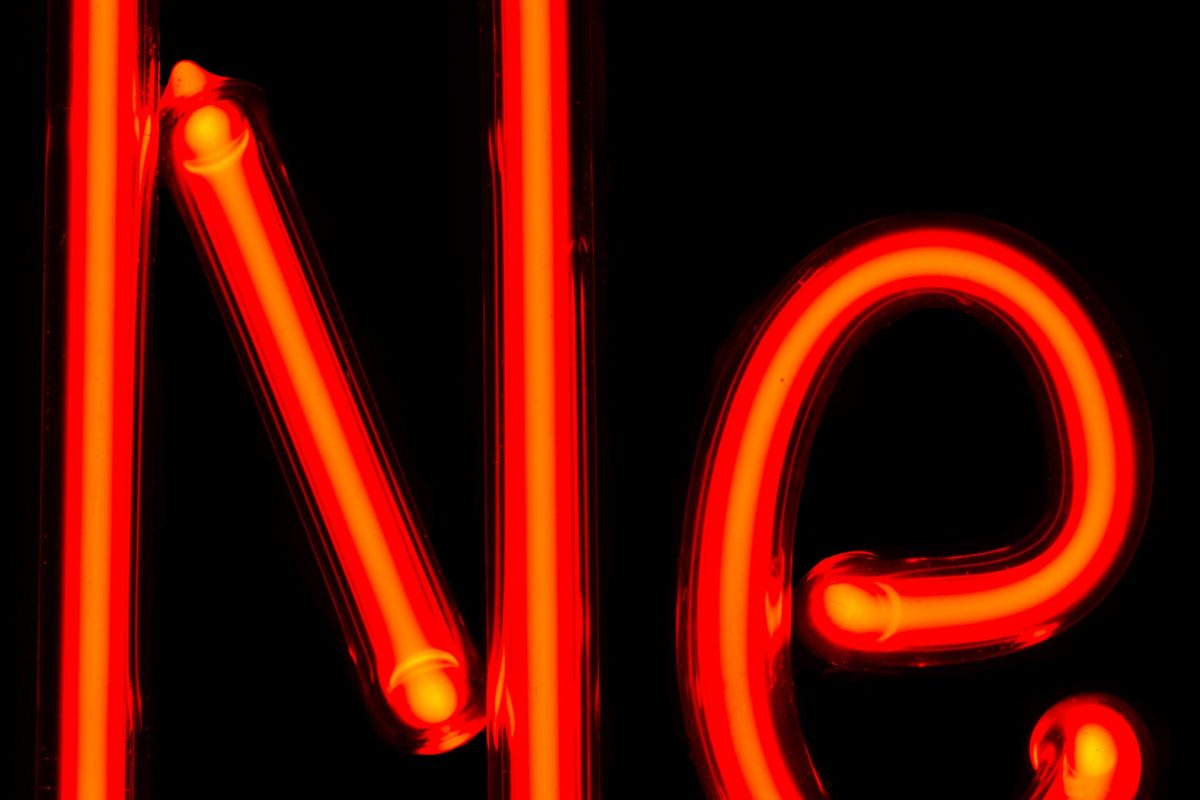
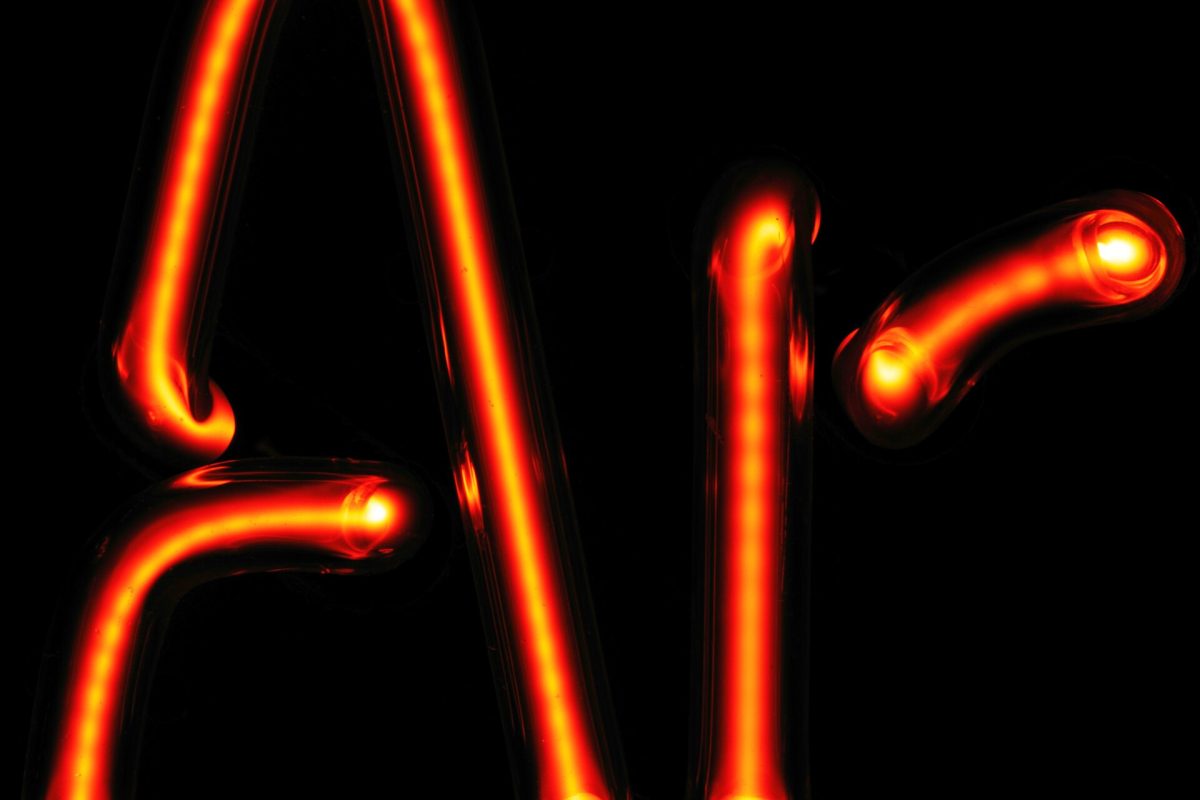
Bare neon gas glows red-orange. Bare argon plus a trace of mercury glows pale blue. Every other color comes from a phosphor coating, colored glass, or both, layered on top. Select a real combination below.
The original neon color, and the reason the whole trade is named after this one gas. Pure neon gas ionizes to a strong red-orange glow with no coating or colored glass needed — the classic diner-sign red.
Sourced against real neon-industry trade references — WestAir Gases, Smithers of Stamford, NeonSignsNow, Oasis Neon Signs, Sygns, signsny.com's tubing color chart, and EGL Lighting's own real color-chart product names (Coated Emerald Green/Ar, Coated Ruby Red/Ar, Noviol Gold). See CREDITS.txt for full citations.
Built on a real published manufacturer luminous-tube footage chart (Allanson Lighting Electrics) — enter your total tube footage and diameter to see the real minimum transformer secondary voltage and current rating.
Effective footage (including electrode-pair allowance): 40 ft.
Reproduces a representative subset of Allanson's own published ANSI Luminous Tube Footage Chart (secondary voltages 2,000-15,000V at the 30mA/60mA current ratings). Argon/mercury tube genuinely reaches farther per volt than neon of the same diameter — a real, documented property, not a display quirk. "Each pair of electrodes equals 1 additional foot of length" is Allanson's own chart footnote.
Real soft neon glass works at roughly 1,200°F (650°C). Minimum practical bend radius is a real function of tube diameter — thinner tube bends tighter, thicker tube needs a wider curve or risks collapsing. Slide to a diameter to see the real range.
Standard sign-script lettering and comfortable cursive loops — the most common range for storefront script and logo work.
Bending temperature and the 2x-3x diameter bend-radius range are grounded in real neon trade references: National Neon Signs (bending temperature), and both a working neon bender's own published account (uneonised.com, "Back to Basics" — real 2x/2.5x/3x doubleback bending marks) and general industrial tube-bending references (The Chicago Curve), which independently converge on the same 2x-3x range. See CREDITS.txt.
The design is drawn full-size on paper or board — the pattern the glass bender will follow tube by tube — and the letterforms or artwork are planned as a run of separate tube sections that can each be bent, filled, and later wired together into one continuous circuit.
Straight glass tubing is heated over a gas-fired ribbon burner or a hand torch until it softens enough to shape — real soft (lead/soda-lime) neon tubing works at roughly 1,200°F (650°C) — while the bender gently blows through a rubber hose at the open end to keep the bore from collapsing as each curve, corner, and letterform is bent freehand against the paper pattern beneath the bench.
Once a section is fully bent to pattern, a metal electrode is heated and fused onto each cut end of the tube, and a small side tube (the tubulation) is added — this is the port the tube will later be evacuated and filled through, and it gets sealed off for good as the very last step.
The sealed tube is connected to a vacuum pump and evacuated, then a brief high-current charge — several hundred milliamps — is run through it to heat the glass to roughly 420°F (216°C) and the electrodes to roughly 1,400°F (760°C), driving off trapped gas and moisture that would otherwise poison the fill and shorten the tube's life.
After the tube cools, the real fill gas — pure neon, or argon with a droplet of mercury — is admitted at a real low pressure that scales with tube diameter (roughly 6mm Hg for the thinnest 9mm tube up to about 15mm Hg for a wide 25mm tube, per standard luminous-tube reference charts), and the tubulation is torch-sealed shut, permanently trapping the fill inside.
A freshly filled tube is run in on slightly elevated current to stabilize its glow — neon settles in roughly 15 minutes, while an argon/mercury fill can take several hours to reach its full, even brightness — before the finished sections are mounted to a backing, wired together with GTO high-voltage lead wire, and connected to a correctly sized transformer.
“They matched the restored sections to glass that's over sixty years old — you genuinely can't tell where the old tube ends and the new begins.”
“Walked us through why our color choice needed a phosphor coating instead of a colored gas before we ever signed off on artwork.”
“Sized the transformer against our real footage instead of just handing us whatever they had on the shelf.”
Tell us about the piece — new storefront signage, an open sign, an art installation, a vintage restoration, or architectural accent lighting — and we'll follow up within two business days.